
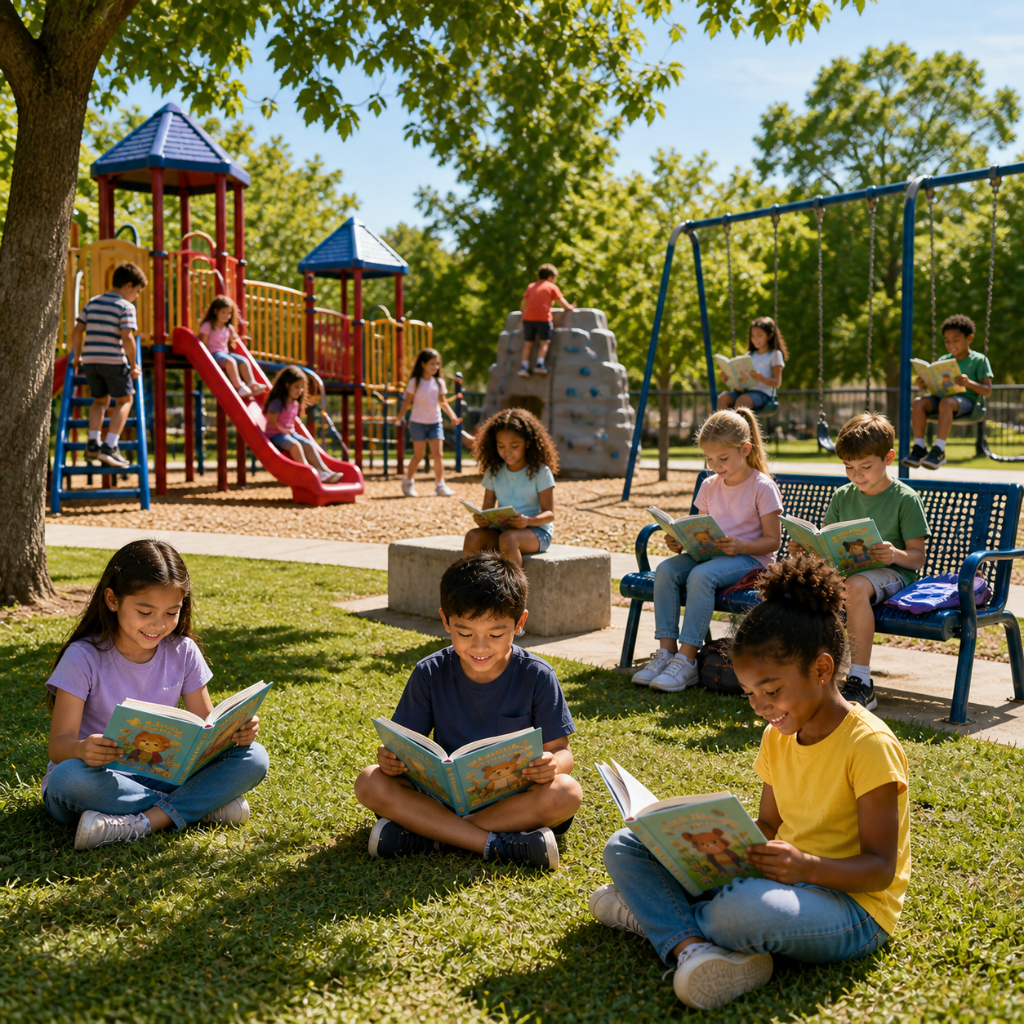
If Reading Felt Like Recess: What Schools Can Learn from Play
Walk through an elementary school during recess and you will hear it instantly. The sound of feet pounding pavement, kids laughing, shouting, and debating the rules of a made-up game. Recess is often the most anticipated part of the school day. Students are energized, engaged, and eager to participate. Nobody has to remind them to have fun.
Now imagine if reading felt that way.
What if reading created the same level of excitement and willingness to engage? What if students looked forward to reading time the way they look forward to the playground?
This idea is not as far off as it might seem. The goal is not to force reading to compete with play. It is to borrow what makes play so engaging. When schools apply those same principles, they can better promote a love of reading that lasts long after elementary school
Why Play Is So Engaging for Kids
Play works because it taps into something very natural.
Kids participate freely, without fear of failure. A child building a block tower that collapses does not feel embarrassed. They laugh, start over, and try again. There is no grade attached to the outcome. There is no judgment. Just the experience of trying.
Play also invites repetition. Kids will play the same game, sing the same song, or rebuild the same tower over and over. Through that repetition, they build skills without even realizing it.
It is also social. Kids feed off each other. A game becomes more exciting when others join in. That shared energy creates motivation that carries through the experience.
Most importantly, play is driven by internal motivation. Kids participate because they want to. And when kids want to do something, they do more of it. That is how growth happens.
How Reading Is Often Experienced in Schools
Now compare that to how reading is often experienced in schools.
For many students, reading feels tied to performance. There is a test at the end of the chapter. There is a reading log to complete. There is a grade attached to each book. The focus shifts from enjoying the story to proving understanding.
There is also pressure to get everything right. Struggling readers feel the weight of every mistake. They read slowly, hesitate, and compare themselves to others. Over time, reading can start to feel frustrating instead of enjoyable.
When reading is consistently treated as a task, students build fewer positive associations with it. They start to see reading as something they do for school, not something they do because they enjoy it.
That is a challenge for any school trying to promote a love of reading.
How Schools Can Apply the Principles of Play to Reading
This does not require a complete overhaul of instruction. It comes down to small, intentional shifts.
Create low-pressure reading time
Set aside time for reading that is not tied to evaluation. When students are not worried about being tested, they are more willing to explore, reread, and stay engaged.
Build consistent routines
Reading should be part of the daily rhythm. When it happens consistently, it becomes a normal and expected part of the day.
Encourage shared experiences
Reading does not have to be silent or isolated. Read-alouds, partner reading, and classroom discussions create energy around books and make the experience more engaging.
Focus on enjoyment alongside skill development
Strong reading skills still matter. But enjoyment is what keeps students coming back. When students have positive experiences with books, they are more likely to continue reading over time.
For more ways to support reading in the classroom, check out our blog, “Supporting Struggling Readers Without Adding More to Teachers’ Plates.”
What This Looks Like in Real Schools
Schools are already putting these ideas into practice.
In Boston, the Focus on Early Learning initiative has incorporated play-based literacy into early classrooms. Students spend time acting out stories, exploring language through play, and engaging with books in interactive ways. The result is stronger literacy and language development compared to more traditional approaches.
These environments work because they prioritize engagement and consistency. When students have regular opportunities to interact with books in a low-pressure setting, they are more likely to:
- participate more consistently
- stay engaged for longer periods of time
- return to reading more often
Over time, that consistency adds up in meaningful ways.
Research shows that students who read for about 20 minutes a day are exposed to nearly 2 million words per year, dramatically increasing their opportunities for vocabulary and comprehension growth.
Why This Approach Works
Positive experiences shape habits.
When reading feels enjoyable and approachable, students are more likely to return to it consistently. Over time, that consistency builds fluency, vocabulary, comprehension, and confidence.
This approach works because it builds:
- consistency → students read more often
- confidence → small successes build momentum
- engagement → students stay interested and involved
- identity → students begin to see themselves as readers
That last piece matters more than many people realize. When students start identifying as readers, reading becomes less about completing an assignment and more about personal connection and enjoyment.
And when students begin to associate reading with positive experiences instead of pressure, they are far more likely to continue engaging with it over time.
Research in reading motivation has shown that positive, low-pressure reading experiences help students stay engaged and continue reading over time. In classrooms that apply these principles, the shift is often noticeable: reading becomes something students return to, not something they try to avoid.
This is how schools promote a love of reading. Not through pressure or constant evaluation, but through repeated, meaningful experiences that make students want to keep going.
A Better Way to Think About Reading
Reading does not need to compete with play. It can learn from it.
The same elements that make recess so engaging can also help students build stronger relationships with reading:
- low pressure
- repetition
- social interaction
- intrinsic motivation
When those elements are present, students are more likely to engage with books consistently. And when students engage consistently, they improve.
Social interaction is especially important. Just like kids feed off each other’s energy on the playground, reading can become more meaningful when it feels shared. Classroom discussions, read-alouds, partner reading, and school-wide reading initiatives help create what many educators refer to as the “community reading effect”, where enthusiasm for reading grows through shared experiences and participation.
This is how schools promote a love of reading that lasts. Not through pressure or constant evaluation, but through positive experiences that make students want to keep coming back to books.
For schools looking to build that excitement beyond the classroom, programs like Book Blast can help students create home libraries of their own and continue those reading habits at home.
When reading starts to feel less like an obligation and more like something students genuinely enjoy, stronger engagement, confidence, and literacy growth naturally follow.