
10 Reading “Rules” You Can Probably Break
Reading comes with a surprising number of unwritten rules.
Don't read the same book again. Pick something more challenging. Start at the beginning. Finish what you started. Comics don't really count. Audiobooks definitely don't count.
But when the goal is to promote a love of reading, some of those “rules” may be worth reconsidering.
Children don't all become readers in the same way. Some fall in love with their favorite series and read every book twice. Some devour graphic novels. Some want to know the ending before they've made it through chapter one. Others discover that they love stories by listening to them first.
And that's okay.
Helping children build a lasting relationship with reading isn't about making sure they follow every unwritten rule. It's about helping them discover that books and stories can be interesting, exciting, comforting, funny, surprising, and worth coming back to.
And sometimes, that means questioning a few of the reading “rules” we've come to accept along the way. Let's take a closer look at 10 rules you can feel good about breaking.
1. “Don't Read the Same Book Over and Over”
If you've ever watched a child finish a book only to immediately start it again, you may have wondered whether it's time to encourage something new.
But rereading isn't wasted reading.
Familiar books give children another opportunity to notice details, revisit vocabulary, strengthen understanding, and become more comfortable with the text. Research on repeated reading has found that the practice can support both reading fluency and comprehension.
So if a child wants to return to the same funny story, favorite character, or beloved series again and again, there's no need to rush them along.
Sometimes knowing exactly what's coming next is part of the fun.
2. “Comics and Graphic Novels Don't Count as Real Reading”
This is one rule we can confidently leave behind.
Graphic novels ask readers to make meaning from both text and images. Children follow dialogue, interpret characters' expressions, track sequences of events, make inferences, and connect visual information with written language.
Research with fourth-grade students found that reading graphic novels encouraged children to use a range of comprehension strategies to understand the stories, including skills they could apply to other types of reading.
In other words, illustrations aren't taking the place of reading. They work alongside the words, giving readers additional information to interpret and understand.
If graphic novels are what make a child excited to pick up another book, that's something worth encouraging.
3. “You Have to Finish Every Book You Start”
Sometimes a book just doesn't click.
Maybe the story moves too slowly. Maybe the subject isn't as interesting as a child expected. Or maybe, after a few chapters, they're simply not excited to keep going.
And that's okay.
There is value in perseverance, especially when children are reading for school or working through something appropriately challenging. But independent reading doesn't always need to become a test of endurance.
When reading for enjoyment, allowing a child to put down a book that isn't holding their interest gives them the opportunity to find one that does. Instead of turning one book into an obligation, they can keep exploring until they discover a story, subject, or character that makes them want to keep reading.
An unfinished book isn't necessarily a reading failure. Sometimes, it's simply part of figuring out what kind of books a child enjoys.
4. “You Have to Start at the Beginning”
Open the cover. Find page one. Read straight through to the end.
That's certainly one way to read a book, but it isn't the only way children explore them.
A child might flip straight to a page about sharks in a nonfiction book. They might study the illustrations before reading the story. They may look at the last page because they're desperate to know how it ends, then go back to find out how everyone got there.
That curiosity is valuable.
Especially when children are exploring books independently, sometimes the page that catches their attention is exactly the page that gets them reading.
5. “Audiobooks Don't Count”
Listening to an audiobook and decoding words on a printed page aren't identical skills. But that doesn't mean audiobooks have no place in a child's reading life.
Audiobooks give children another way to experience stories, language, vocabulary, characters, and ideas.
A 2026 study of third- and fourth-grade students found that children who listened to text-supplemented audiobooks learned new vocabulary from the books. The researchers also found that some struggling readers benefited more when audiobook listening was paired with additional one-on-one reading support.
Rather than thinking of audiobooks as a replacement for print reading, think of them as another way children can interact with books and stories.
A child can listen to a story in the car and curl up with a physical book before bed. There's room for both, and both can help children discover stories they enjoy and experiences that promote a love of reading.
6. “Kids Should Always Be Reading Something Challenging”
Challenge has an important place in reading. More complex texts can introduce children to new vocabulary and ideas while giving them opportunities to strengthen their reading skills.
But not every reading experience needs to push a child beyond what feels comfortable or move them toward a higher reading level.
Sometimes children need books that feel familiar and approachable. A favorite series, an easy-to-follow story, or a book they can read confidently can make reading enjoyable rather than exhausting. Those experiences matter too, especially when the goal is to help children build a reading habit they want to continue.
Reading level can help guide children toward books that support their developing skills, but it doesn't have to define every book they read. How often children read, whether they stay engaged, and whether reading becomes something they want to return to are important parts of the picture too.
For more on that connection, explore Why Reading Habits Matter More Than Reading Levels.
7. “Picture Books Are Only for Little Kids”
Picture books don't suddenly lose their value when children get older.
Some picture books introduce sophisticated vocabulary. Others explore history, science, emotions, relationships, or complicated ideas. Illustrations can add layers of information and meaning that aren't communicated through the text alone.
And sometimes an older child simply loves a beautifully illustrated story, and enjoying it is reason enough to pick it up. Reading doesn't always have to be about moving on to the next type of book.
A child's age doesn't have to determine which books they're allowed to enjoy. If a book captures their attention, gives them something to think about, or makes them want to read it again, it still has a place on the shelf.
8. “Reading Has to Happen Somewhere Quiet”
A cozy reading corner is wonderful.
So is the backseat of the car.
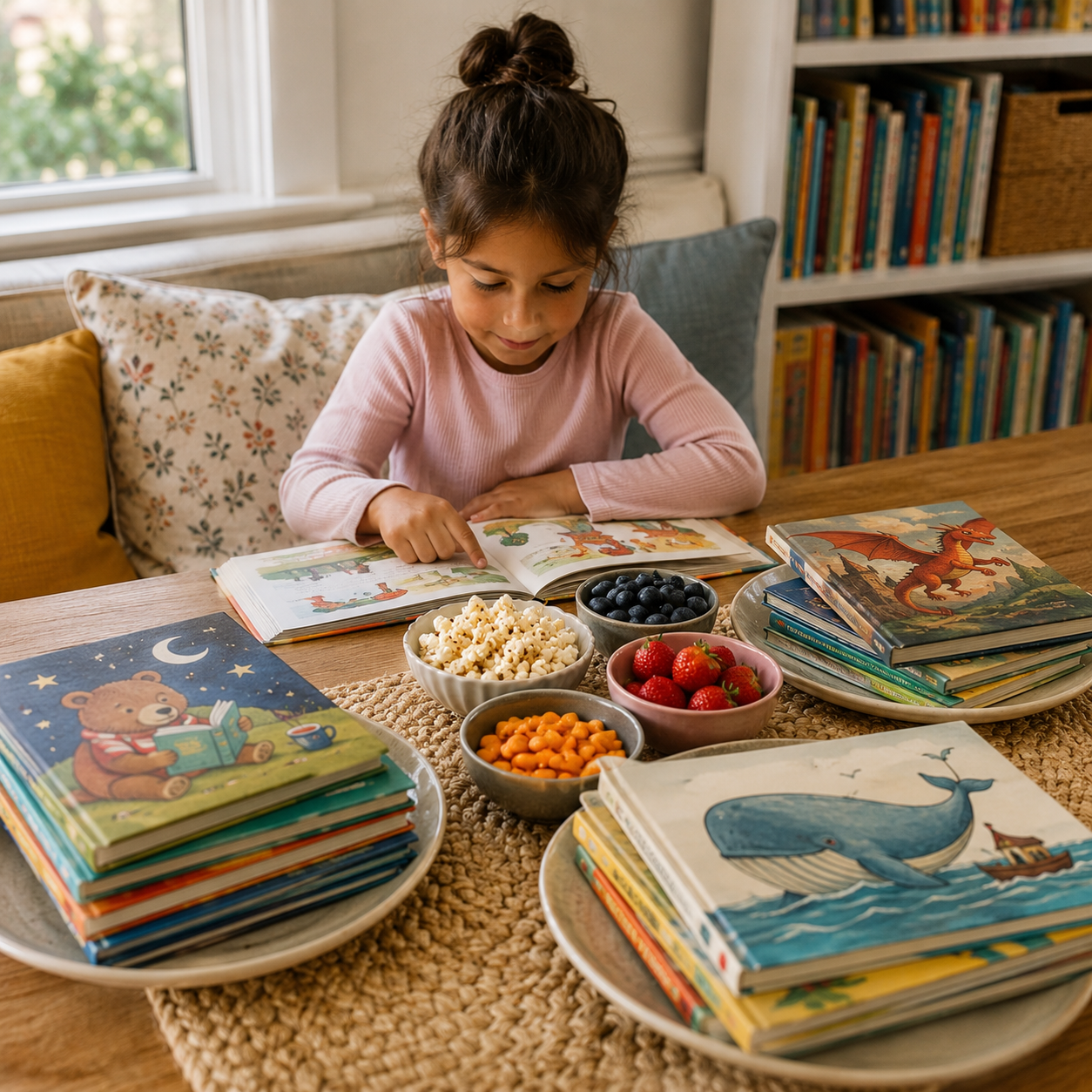
Or the kitchen table. The couch. A blanket outside. A waiting room. The floor next to the family dog. Even a busy room where the rest of the family is hanging out.
Some children concentrate best when everything around them is quiet. Others are perfectly happy reading with everyday life happening in the background.
Instead of trying to force the “perfect” reading environment, pay attention to the places where a child naturally settles into a book. Helping them find and embrace their favorite reading spots can make it easier for reading to become something they look forward to and return to regularly.
The best reading spot is the one where reading actually happens.
9. “Reading Only Counts If It's a Book”
We love books. But books aren't the only place children encounter written language.
A child might pore over a magazine about a favorite sport, follow instructions for building something, read facts about animals, study a recipe, or become fascinated by an informational article.
These experiences don't have to compete with books. They can help broaden a child's reading life. Interests can start almost anywhere, and reading gives children another way to explore them.
A child who has a favorite basketball player might stop to read an article about them, then become interested in picking up their biography. A trip to a planetarium might spark a fascination with space that leads to reading facts online, looking through a magazine, and eventually searching the bookshelf for a book about planets.
The format may change along the way, but every one of those experiences can help a child discover that reading is a way to learn more about the things they already love.
10. “There's a Right Way to Be a Reader”
If there's one thing all these rules overlook, it's that readers are different. And when children engage with reading in different ways, one set of rules isn't going to work for everyone.
Some children reread the same favorites again and again, while others are always ready for something new. Some love graphic novels or audiobooks. Some want a quiet corner, while others are perfectly comfortable reading at the kitchen table. One child might read a book from beginning to end, while another flips through the pages that interest them first. There are plenty of ways for reading to become part of a child's life.
Those differences aren't necessarily problems to fix. They can tell us something about the reading experiences that help a child feel comfortable, curious, and engaged.
That's why understanding what kind of reader a child is can be so useful. Reading preferences and habits can develop over time, and paying attention to them can help parents and educators create more opportunities for positive experiences with books.
For a deeper look at different reading styles and preferences, explore What Kind of Reader Are You? (And Why It Matters for Students Too).
The One “Rule” Worth Keeping: Keep Reading
If the goal is to promote a love of reading, perhaps the most important thing we can do is make room for children to develop their own relationship with books.
That matters now more than ever. The National Literacy Trust's 2026 research found that just 36.1% of children and young people ages 8 to 18 said they enjoyed reading in their free time. The same research found a strong relationship between enjoyment and frequency: 49.8% of children and young people who enjoyed reading said they read daily, compared with just 4.5% of those who didn't enjoy reading.
Promoting a love of reading doesn't mean lowering expectations or replacing strong literacy instruction. It means recognizing that reading can take many forms and that positive experiences with books matter.
Let kids reread the favorite.
Let them laugh their way through the graphic novel.
Let them put down the book that isn't working and discover one that does.
And most importantly, give them plenty of opportunities to keep encountering books.
Programs like Book Blast help extend those opportunities beyond the classroom by putting new, age- and grade-appropriate books directly into students' hands. Every student receives at least one new book to keep at no cost to the school or families, helping children build home libraries and giving them more opportunities to make reading part of everyday life.
Because the goal isn't to create ten children who all read the same way.
It's to help every child discover a reason to keep reading.